
Reaching 60,000 miles does not place a car on borrowed time. It simply means maintenance needs to become more deliberate. Some vehicles reach this point while still feeling tight, quiet and dependable; others arrive with missed services, recurring warning lights or a growing list of worn parts. The number on the odometer is useful, but it is only one part of the story. Vehicle age, journey type, previous repairs and the quality of its service history all influence what the car needs next.
Good service car maintenance is therefore not about replacing every component “just in case”. It is about following the manufacturer’s schedule, inspecting the vehicle as a complete system and dealing with developing faults before they become expensive. A well-planned high-mileage car service may include routine oil and filter changes, fluid checks, belt inspection, brake measurements and targeted diagnostics. Think of it as a health review rather than a single treatment: the technician looks for patterns, compares current condition with known service intervals and helps you decide what is urgent, what is due soon and what can safely be monitored.
When Is a Car Considered High Mileage?
There is no universal mileage at which every car becomes “high mileage”. In everyday conversation, drivers often use the term after 60,000 or 100,000 miles, but manufacturers design different engines, gearboxes and service schedules. A maintained vehicle with 100,000 motorway miles may be in better mechanical condition than a neglected car showing half that distance.
The sensible approach is to assess mileage in context. Review the car’s age, use, records and present condition instead of assuming that the odometer alone predicts reliability. This prevents unnecessary work while making it less likely that an important scheduled replacement will be missed.
Mileage vs Vehicle Age
Mileage shows how far a car has travelled; age shows how long its components have been exposed to heat cycles, moisture, corrosion and material deterioration. Rubber hoses, seals, tyres and belts can age even when the car covers few miles. Brake fluid absorbs moisture over time, batteries lose capacity and coolant can lose protective properties. That is why a car maintenance schedule normally combines mileage-based and time-based intervals. The item becomes due when the first limit is reached—not only when the mileage target appears.
Motorway Mileage vs Short-Trip Mileage
Long, steady motorway journeys can be relatively gentle because the engine reaches full operating temperature and avoids constant cold starts. Repeated short trips may create harder conditions: the oil may not warm fully, the battery has less time to recharge and moisture can remain in the engine and exhaust. Stop-start traffic also works the brakes, clutch and cooling system more frequently. Two cars showing 70,000 miles can therefore have very different needs depending on how those miles were accumulated.
Service History and Previous Repairs
A detailed service history gives the technician a map of completed work. It may confirm when the timing belt, spark plugs, coolant or transmission fluid was last changed. Invoices are especially useful because a stamped book may record only a general service, not the exact parts and specifications used. Previous MOT advisories can reveal repeated tyre, brake or suspension concerns. If records are incomplete, treat uncertain scheduled items as questions to investigate rather than assuming they have been done.
Start with the Manufacturer Service Schedule
The manufacturer’s schedule should be the foundation of any preventive maintenance plan. It is written for a particular engine, transmission and vehicle configuration. Generic advice can help you understand the categories, but it cannot safely replace model-specific information such as the correct oil specification or timing-belt interval.
Before booking work, gather the registration number, current mileage, handbook and available invoices. A garage can then compare the evidence with the correct schedule and the vehicle’s actual condition. This is more accurate than ordering a standard list of parts solely because the car has passed 60,000 miles.
Time-Based and Mileage-Based Intervals
Some items are linked mainly to mileage because they wear through use; others deteriorate with time. Engine oil may be due after a set number of miles or months, while a timing belt can have both limits. Brake fluid, coolant and filters may also carry time-based recommendations. Follow whichever threshold arrives first. If a dashboard service indicator uses variable intervals, remember that it still depends on correct records and should not override known time limits in the handbook.
Severe-Use Service Conditions
“Severe use” does not necessarily mean racing or towing every day. Frequent short journeys, extended idling, dusty roads, heavy loads, repeated urban stop-start driving and extreme temperatures can all justify shorter intervals on some vehicles. If most of your journeys around Milton Keynes are brief school runs or local errands, tell the technician. The pattern may affect oil, battery, brake and diesel particulate filter recommendations.
Missing or Incomplete Service Records
When records are missing, avoid two extremes: replacing everything immediately or doing only an oil change and hoping for the best. Start by checking digital records, previous invoices and the online MOT history. Then identify safety-critical checks and manufacturer-scheduled items whose status cannot be confirmed. Fluid condition, belt markings and component wear may provide clues, but visual appearance does not always prove when a part was replaced.
Building a Baseline Inspection
A baseline inspection establishes the vehicle’s current condition. It can cover fluid levels and leaks, tyres, brakes, steering, suspension, belts, battery performance, lights, wipers and visible exhaust components. A road test may reveal noise, vibration, poor gear selection or braking behaviour that is not obvious on a stationary ramp. The result should be a prioritised plan—not an unexplained shopping list.
Engine Oil, Consumption and Internal Wear
Oil is the engine’s working lifeblood. It lubricates moving parts, carries heat, suspends contamination and supports hydraulic systems such as variable valve timing. As mileage rises, seals, piston rings and internal clearances may change, making correct oil level and quality even more important.
Regular checks also create useful evidence. A single low reading tells you the oil needs attention; a record showing how quickly the level falls helps a technician distinguish normal usage from an emerging leak or internal consumption problem. Never rely only on the warning light, because some warnings indicate pressure loss rather than a routine request to top up.
Choosing the Correct Oil Specification
Use the viscosity and manufacturer approval specified for the exact engine. A label such as 5W-30 describes viscosity behaviour, but it does not by itself confirm compatibility. Additive packages, emissions-system requirements and formal manufacturer approvals matter too. Older mileage is not a reason to guess a thicker grade. The wrong oil can affect lubrication, cold starting, turbocharger protection or diesel emissions equipment. A professional car service should match the oil to the vehicle data, not simply to its age.
Monitoring Oil Consumption
Check the level on level ground using the handbook procedure, then record the mileage and any oil added. A stable pattern is easier to manage than an unexplained change. Rising oil consumption, blue exhaust smoke, oily spark plugs or repeated low-level warnings need investigation. Do not overfill: excess oil can also cause damage. If consumption increases suddenly, arrange an inspection rather than repeatedly topping up without finding the cause.
Leaks, Sludge and Contamination
Oil around a cam cover, sump, filter housing or turbo pipe does not always mean major internal failure, but it should not be ignored. Leaks can contaminate belts, damage rubber components and eventually reduce the level. Thick deposits under the filler cap may reflect poor maintenance, although short journeys can also create light condensation. A technician should examine the wider evidence before recommending cleaning products or an engine flush.
Engine Noise and Low-Oil-Pressure Warnings
Rattling at start-up, persistent tapping, knocking or a red oil-pressure warning can indicate inadequate lubrication or mechanical wear. If the oil-pressure light remains on after starting, or appears while driving, stop safely and switch off the engine as soon as it is safe. Continuing to drive can turn a repairable fault into severe engine damage. The level should be checked correctly, but a normal level does not rule out pump, pickup, sensor or internal-pressure problems.
When Diagnostics or Mechanical Testing Is Needed
Electronic vehicle diagnostics can read fault codes and live data, but they do not replace mechanical checks. Depending on the symptom, diagnosis may include an oil-pressure test, compression or leak-down testing, inspection for intake leaks, cooling-system pressure testing or examination of the oil and filter. A fault code is a clue, not an instruction to replace the named part. Proper engine diagnostics combine scan data, measurements and physical inspection.
Timing Belt, Timing Chain and Auxiliary Belts
Belts and chains keep important engine components synchronised or driven. Their service requirements vary widely, so this is one area where model-specific information is essential. A missed interval can be costly, particularly if a failed belt allows internal engine contact.
Ask what the schedule requires and whether previous replacement can be proven. If the record is uncertain, a technician can assess the risk using age, mileage, engine type and visible condition, but an external inspection cannot confirm the internal strength of every belt.
Timing-Belt Replacement Intervals
A timing belt is normally replaced at a defined time or mileage interval. The exact figure may vary by engine code and sometimes changes with manufacturer guidance, so do not rely on a universal “60,000-mile rule”. A proper replacement may include tensioners, idlers and other specified hardware. Record the date, mileage and parts used so the next owner or technician does not have to guess.
Timing-Chain Warning Signs
Timing chains are often described as lasting the life of the engine, but they depend on correct oil level, oil quality and tensioning components. Warning signs can include a rattle on cold start, correlation fault codes, rough running or metal contamination in the oil. These symptoms require prompt diagnosis. Replacing a sensor without checking chain timing can mask the real cause.
Auxiliary Belt and Tensioner Wear
The auxiliary belt may drive the alternator, air-conditioning compressor or other equipment. Cracking, frayed edges, glazing, squealing or an unstable tensioner can signal wear. A seized pulley may damage even a relatively new belt. Inspection should cover the full drive system rather than the belt surface alone.
Water Pump Replacement Considerations
On engines where the water pump is driven by the timing belt, replacing the pump during scheduled belt work may reduce duplicated labour and the risk of a later pump fault disturbing the new belt. That is not an automatic rule for every design. The decision should follow the manufacturer procedure, the parts configuration and evidence of leakage, bearing play or noise.
Cooling System Maintenance
An engine produces intense heat, and the cooling system must control it in traffic, on the motorway and after shutdown. Older vehicles are more likely to develop brittle hoses, tired seals, blocked radiators or weakening pumps. A small coolant loss can quickly become a serious overheating event.
Never remove a pressurised expansion-tank or radiator cap while the engine is hot. If the temperature warning appears or steam is visible, stop safely and allow the car to cool. Repeated topping up is not a repair; the system needs testing to locate the loss.
Coolant Condition and Replacement
Correct coolant provides freeze protection, raises the boiling margin and protects metals from corrosion. Different formulations are not automatically interchangeable, even when the colours look similar. Use the manufacturer-specified type and mixture. Scheduled fluid replacement matters because corrosion inhibitors deteriorate over time. Contaminated, rusty or oily coolant requires investigation before a simple refill.
Hoses, Radiator and Expansion Tank
Technicians check hoses for swelling, cracking, rubbing and hardened connections, as well as the radiator and expansion tank for staining or seepage. Dried deposits can mark a slow leak that evaporates on a hot engine. A pressure test may expose faults that are not visible when the system is cold. The cap itself also matters because it regulates system pressure.
Thermostat and Water-Pump Symptoms
A thermostat stuck closed can cause overheating; one stuck open may delay warm-up and reduce heater performance or efficiency. Water-pump faults may produce leakage, bearing noise, poor circulation or temperature fluctuations. Because several faults create similar symptoms, parts should be tested rather than changed through guesswork.
Overheating Risks in Older Vehicles
Overheating can distort cylinder heads, damage head gaskets and degrade oil. Stop driving if the temperature rises abnormally, the coolant warning appears with overheating symptoms, or steam escapes. Switching the heater on is not a repair strategy. Arrange recovery if the vehicle cannot maintain a safe temperature.
Transmission, Clutch and Driveline Checks
The drivetrain carries engine power to the wheels, so changes often appear as slipping, vibration, noise or difficult selection. These symptoms can develop gradually, and drivers sometimes adapt without noticing how much the behaviour has changed.
A road test followed by inspection helps separate clutch wear from engine faults, wheel imbalance, mounting problems or gearbox issues. Early diagnosis can prevent secondary damage and gives you time to plan a repair.
Manual Gearbox and Clutch Wear
A high clutch biting point, engine speed rising without matching acceleration, judder when moving away or difficulty selecting gears can indicate clutch or hydraulic problems. However, not every heavy pedal means the clutch plate is worn. Cables, hydraulics, linkages, mounts and dual-mass flywheels may contribute. Ask for diagnosis before comparing clutch repair Milton Keynes cost, because the correct estimate depends on the failed components and vehicle design.
Automatic Transmission Service Requirements
Automatic, dual-clutch and continuously variable transmissions have different fluids and procedures. Some require a filter, temperature-controlled level setting or specific diagnostic steps. Follow the manufacturer schedule and use the exact approved fluid. A generic power flush is not automatically appropriate, particularly when a high-mileage gearbox already shows faults. Harsh shifts, delayed engagement or slipping should be diagnosed before routine servicing is authorised.
CV Joints, Driveshafts and Mountings
Clicking on full steering lock may point towards an outer CV joint, while vibration under acceleration can involve an inner joint, driveshaft or mounting. Split CV boots allow grease to escape and dirt to enter, accelerating wear. Engine and gearbox mounts can also create thumps or excessive movement. These components should be inspected together because one symptom can have several sources.
Vibration, Slipping and Difficult Gear Changes
Note when the symptom occurs: during acceleration, at a particular road speed, while turning, during braking or only when cold. This detail shortens diagnostic time. Do not continue driving if the car cannot select a gear reliably, loses drive, produces severe vibration or makes grinding noises. A modest recovery cost is preferable to damage caused by forcing the vehicle onward.
Brakes, Suspension and Steering
High mileage naturally brings wear to friction parts, joints and dampers, but replacement should be based on measurement and condition. The aim is consistent braking, predictable handling and secure tyre contact not simply passing the next inspection.
Because wear can develop gradually, the driver may not notice longer stopping distances or reduced damping. Routine vehicle servicing provides opportunities to inspect these systems before symptoms become dramatic.
Brake Pads, Discs, Fluid and Hoses
Brake inspection should cover pad thickness, disc condition, caliper operation, hoses, pipes and visible leaks. Brake fluid condition and scheduled replacement also matter because the fluid absorbs moisture over time. Pulling, grinding, vibration, a soft pedal or a brake warning light needs prompt attention. If braking performance changes suddenly, stop using the car and seek professional help.
Shock Absorbers, Springs and Bushes
Worn shock absorbers can reduce body control and tyre contact; broken springs may alter ride height or damage nearby parts. Bushes isolate movement and vibration but can split or soften with age. Clunks, excessive bouncing, instability or uneven ride height justify inspection. Replacing parts in axle pairs may be recommended for balance, depending on the component and manufacturer procedure.
Ball Joints, Track Rods and Wheel Bearings
Play in ball joints or track rods can affect steering accuracy and tyre wear. A wheel bearing may hum or growl with road speed, although tyre noise can sound similar. A technician should lift and load components correctly because some movement only appears under particular conditions. Safety-critical looseness should not be left for the next routine service.
Wheel Alignment and Uneven Tyre Wear
Uneven tread, an off-centre steering wheel or pulling after a pothole impact can indicate an alignment or suspension issue. A professional wheel alignment check measures the geometry; it does not repair worn joints or damaged tyres. Any mechanical problem should be corrected first, followed by alignment to the appropriate specifications.
Battery, Alternator and Electrical Ageing
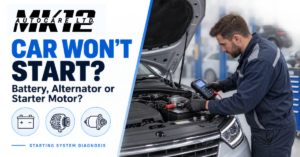
Modern cars depend on stable voltage. A weak battery can cause slow cranking, start-stop problems and misleading electronic faults, while a charging problem can leave the vehicle stranded. High mileage also means more heat cycles, vibration and exposure for connectors and wiring.
Electrical diagnosis should start with the complaint and basic measurements. Replacing the battery may solve a genuine capacity problem, but it will not repair an alternator, parasitic drain, corroded earth or damaged wire.
Battery Capacity and Cold Starting
Slow cranking on cold mornings, repeated jump-starts or electrical systems resetting can suggest reduced battery capacity. A proper test considers state of charge and available starting performance. If the battery is simply discharged, the cause may be short-trip use or a drain rather than battery age alone. Some vehicles require battery registration or coding after replacement.
Charging-System Performance
The alternator, drive belt, battery sensor and control system work together. Charging voltage can vary on smart-charging vehicles, so a single basic reading may not tell the whole story. Battery and alternator testing under appropriate conditions helps determine whether the system can support the vehicle’s electrical load.
Sensor and Wiring Problems
Ageing connectors can suffer moisture entry, corrosion, damaged locks or chafed wiring. A sensor-related fault code does not prove the sensor itself has failed. Technicians may check power supply, earth, signal behaviour and wiring continuity before replacing a component. This process avoids the expensive habit of fitting parts until the warning disappears.
Warning Lights That Need Diagnostics
Red oil-pressure, brake or overheating warnings may require you to stop as soon as it is safe. Amber engine, ABS or emissions lights generally call for prompt assessment, with urgency depending on vehicle behaviour and handbook guidance. A vehicle diagnostic test can identify stored codes and live-data clues, but the final diagnosis should be confirmed through testing.
Exhaust, DPF and Emissions Systems
The exhaust manages gases, noise and emissions. Corrosion, leaks and failed mountings become more common as a vehicle ages, while diesel particulate filters can struggle when the car repeatedly makes short journeys.
Emissions faults may also originate upstream from air leaks, injectors, temperature control or sensors. Cleaning a symptom without correcting the cause can lead to a rapid return of the problem.
Exhaust Leaks and Corrosion
Listen for blowing or rattling, especially during a cold start, and note fumes entering the cabin. Exhaust leaks can affect emissions readings and may expose occupants to harmful gases. Heat shields and hangers should also be secure. The current DVSA MOT manual treats excessive exhaust noise, insecure components and relevant emissions-system defects as testable issues.
DPF Regeneration Problems
A diesel particulate filter traps soot and periodically burns it during regeneration. Frequent short trips, low exhaust temperature or an engine fault may interrupt this process. Warning lights, reduced performance, rising oil level or repeated regeneration attempts need diagnosis. A long drive is not a safe universal cure, particularly when the car is in limp mode or another warning is present.
EGR and Sensor Faults
The exhaust gas recirculation system, pressure sensors, temperature sensors and airflow measurement all influence emissions control. Carbon deposits are possible, but wiring faults, leaks or incorrect readings can create similar symptoms. Scan data should be compared with expected behaviour before cleaning or replacement is recommended.
Preparing for the MOT Emissions Test
An MOT checks road-safety and environmental standards, but it is not a substitute for servicing. Fix warning lights, leaks, poor running and abnormal smoke before the appointment. GOV.UK states that most vehicles need an MOT by the third anniversary of registration and annually thereafter, and the test checks safety and environmental standards. Drivers can also review recorded mileages, failures and minor defects through the official MOT-history service. Combine a MOT and service when both are due, but remember they remain different inspections.
Creating a High-Mileage Maintenance Plan
A useful plan turns a long inspection report into manageable decisions. Ask the garage to explain the defect, the risk of delay, the recommended remedy and any related work that could reduce duplicated labour. This makes budgeting clearer and keeps the car’s needs in proportion.
Review the plan at each service. Components do not age at identical rates, so an item marked for monitoring may become due before the next scheduled visit if symptoms change.
Prioritise Safety-Critical Work
Brakes, tyres, steering, structurally important suspension parts and serious fluid leaks come first. Warning lights associated with braking, oil pressure or overheating also deserve immediate attention. Cosmetic issues and comfort features may wait, but only after a technician has confirmed they do not create a safety or legal concern.
Separate Urgent Repairs from Monitoring Items
Request clear categories such as “repair now”, “plan soon” and “monitor”. The report should include measurements or observations where practical for example, remaining brake-pad material, tyre tread readings or the location of a seepage. This gives you evidence for the decision and a reference point for the next inspection.
Budget for Scheduled Replacements
Timing-belt work, tyres, brakes and transmission servicing can be predicted more easily when records are organised. Add likely work to an annual budget instead of waiting for several items to collide. When comparing car servicing prices, check what is included, which specifications will be used and whether additional work requires approval. The lowest headline price may not cover the maintenance your vehicle actually needs.
Record Every Service and Repair
Keep invoices, inspection reports, fluid specifications and replacement mileages. Update the physical or digital service record after every visit. Good documentation supports future diagnosis, helps prevent duplicate work and gives a buyer more confidence. You can also use the official MOT history to track recorded mileage and recurring advisories, though it does not replace your service file.
High-Mileage Servicing in Milton Keynes
If you drive in MK12 Milton Keynes, Wolverton, Stacey Bushes or nearby areas, choose a garage that can combine scheduled automotive servicing with mechanical inspection and diagnostics. High-mileage work is most effective when the technician looks beyond the oil change and explains how each finding affects safety, reliability or future cost.
At MK12 Autocare, the practical starting point is your registration, mileage, driving pattern and available records. From there, the team can help build a vehicle-specific plan rather than treating 60,000 miles as a universal replacement list.
Inspection at MK12 Autocare
An inspection can cover the engine, fluids, brakes, steering, suspension, tyres, belts, battery and visible exhaust components, with a road test or diagnostics where appropriate. If you are searching for a full car service Milton Keynes, confirm the inclusions and discuss known symptoms when booking. A service is more useful when the technician knows about intermittent noises, fluid loss or warning lights in advance.
Linking Servicing with Diagnostics and MOT
Servicing, diagnostics and MOT testing answer different questions. A service follows maintenance requirements; diagnostics investigate a fault; the MOT checks minimum legal road-safety and environmental standards at the time of the test. They can be coordinated for convenience, but one does not automatically replace the others. If your annual test is approaching, you can book your MOT test alongside relevant maintenance.
Booking from MK12 and Wolverton
Before making an online vehicle service booking, note the current mileage, dashboard messages, fluid usage and any recent changes in performance. Bring service records and wheel-locking keys if applicable. For drivers comparing car repair and maintenance near me, clear reporting, correct specifications and evidence-based recommendations are more valuable than a generic list of replacements.
Condition Matters More Than the Odometer Alone
A high-mileage car is not automatically an unreliable car. The odometer tells you how far it has travelled, but maintenance history, journey type, age and present condition tell you how well it may travel next. After 60,000 miles, the best strategy is to follow the manufacturer schedule, establish a reliable baseline and pay closer attention to changes in oil use, temperature, noise, braking, steering and gear selection.
Smart service car maintenance is proactive without being wasteful. Deal with safety-critical faults first, plan scheduled replacements, monitor lower-priority wear and document every decision. If records are missing or warning lights are present, use inspection and testing to replace guesswork with evidence. For a tailored high-mileage car service in Milton Keynes, contact MK12 Autocare to discuss your vehicle, mileage and maintenance history.
Frequently Asked Questions
Q1: Is a high-mileage car automatically unreliable?
No. A well-maintained vehicle with complete records can remain dependable beyond 100,000 miles, while a lower-mileage car may suffer from neglect or age-related deterioration. Condition and maintenance matter more than mileage alone.
Q2: Should older engines always use thicker oil?
No. Use the viscosity and approval specified for the engine unless a qualified professional recommends a supported alternative. Choosing thicker oil simply because the car is older can create lubrication or emissions-system problems.
Q3: Is an engine flush suitable for every high-mileage vehicle?
No. An engine flush is a product or procedure, not a universal requirement. An engine with heavy deposits, uncertain history or mechanical problems should be assessed first. The correct decision depends on condition, manufacturer information and the product’s approved use.
Q4: How often should transmission fluid be changed?
Follow the schedule for the exact gearbox. Intervals and procedures differ between manual, torque-converter automatic, CVT and dual-clutch systems. If the gearbox already slips, shudders or shifts poorly, arrange diagnosis before routine fluid replacement.
Q5: Can regular servicing prevent every breakdown?
No maintenance plan can prevent every unexpected failure, but regular car servicing can identify wear, leaks and deteriorating components before many faults become serious. It also reduces damage caused by overdue fluids, filters and scheduled parts.
Q6: When is repairing an older car no longer economical?
Compare the repair cost with the vehicle’s condition, value, expected future work and the cost of replacing it. A large repair can still make sense when the body, drivetrain and history are strong. Ask for a prioritised estimate rather than deciding from one fault alone.
Q7: Does a high-mileage vehicle need more frequent MOT tests?
Not simply because of mileage. In Great Britain, most cars require an annual MOT after the first test becomes due. However, you should not wait for the MOT if a safety fault or warning appears between tests. An MOT confirms minimum standards on the test day; it is not a maintenance programme.
Q8: Should I arrange diagnostics before buying a used high-mileage car?
A pre-purchase inspection is wise. It can include a road test, mechanical checks, a review of service and MOT records and car diagnostics where appropriate. Diagnostic scans alone cannot reveal every mechanical or structural problem, so they should form part of a broader inspection.