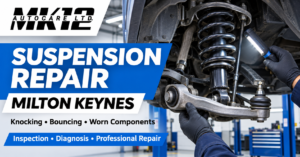

Your suspension does much more than make a journey comfortable. It keeps the tyres in controlled contact with the road, supports the weight of the vehicle and helps the driver maintain stability during steering, braking and acceleration. When a spring, shock absorber, bush or joint wears out, the change can affect handling long before the car becomes undriveable.
The first warning may be a knock over a speed bump, extra bouncing after a pothole or a steering wheel that no longer settles naturally. You might also notice one corner sitting lower, the front dipping under braking or a tyre wearing faster on one edge. These symptoms overlap, so replacing a part based on noise alone can waste money without correcting the real fault.
Professional suspension repair Milton Keynes motorists can rely on begins with diagnosis. A technician needs to understand when the symptom occurs, inspect the vehicle in the correct position and check related steering, braking and tyre components. The repair should address worn or damaged parts before any final wheel alignment is completed.
MK12 Autocare provides suspension inspection and car repair Milton Keynes services from its Stacey Bushes workshop. This page explains the common warning signs, the components that wear, the diagnosis process and the factors that influence a vehicle-specific quotation.
Signs Your Suspension Needs Inspection
Suspension wear is not always dramatic. Rubber bushes can deteriorate slowly, dampers can lose control over thousands of miles and a joint can develop gradually increasing play. Because drivers adapt to small changes, a problem may feel “normal” until it becomes noisy or affects tyre wear.
One symptom does not identify one part. A knock could come from an anti-roll bar link, top mount, ball joint, exhaust bracket or another loose component. An accurate vehicle inspection separates the symptom from the cause and helps the auto mechanic recommend the right work.
Knocking Over Bumps
A knock or clunk over uneven roads often suggests movement where a component should be controlled. Worn anti-roll bar links, bushes, ball joints, top mounts or control-arm fixings are common possibilities. A broken spring may also move in its seat and create a metallic sound.
Notice whether the noise comes from the front or rear, one side or both sides. Tell the garage whether it happens on small ripples, sharp potholes, steering input or braking. This detail gives the technician a useful starting point, but the sound still needs to be reproduced and physically checked.
Excessive Bouncing
Springs support the vehicle and absorb road movement, while shock absorbers control the spring’s repeated motion. If damping becomes weak, the body may continue moving after a bump instead of settling promptly. The ride can feel floaty, especially on undulating roads.
A simple push-down test may suggest poor damping, but it is not a complete diagnosis. Vehicle design, body stiffness and electronic suspension can change how the test feels. A professional check looks for leakage, damage, insecure mountings and performance symptoms together.
Vehicle Leaning to One Side
A car that sits lower at one corner may have a fractured or weakened coil spring, a damaged spring seat or a load-related issue. Tyre pressure and uneven parking surfaces can also create a misleading visual difference, so measurements should be taken on level ground.
Do not ignore a sudden change in ride height. A broken spring end can move toward the tyre, damage nearby components or make the vehicle unstable. If there is contact, a severe lean or an obvious fracture, ask the repair centre whether the car should be recovered rather than driven.
Nose-Diving During Braking
Some forward weight transfer under braking is normal. Excessive pitching can point to weak front dampers, but braking faults, tyre condition and load distribution can also affect the sensation. The vehicle may feel less settled during an emergency stop or over a rough surface.
Tell the workshop whether the car pulls, vibrates or makes a noise at the same time. These details help separate suspension movement from brake-disc, caliper or tyre problems. Safety-critical braking symptoms deserve prompt inspection rather than an online diagnosis.
Unstable Motorway Handling
Worn suspension can make a car feel nervous in crosswinds, slow to settle after a lane change or unusually sensitive to road grooves. Weak dampers and worn joints are possible causes, but incorrect tyre pressures, damaged tyres, alignment errors and steering play can produce similar behaviour.
Reduce speed and avoid sudden steering if the car feels unstable. A controlled road test by an experienced technician can help reproduce the concern, but severely loose, broken or damaged components should be identified on the lift before road testing.
Uneven Tyre Wear
Suspension faults can change wheel position and allow unwanted movement while driving. This may contribute to wear on one shoulder, scalloped tread or repeated damage to a replacement tyre. Incorrect wheel alignment, tyre pressure, wheel balance and driving use also influence wear.
The Highway Code advises that excessive or uneven tyre wear may result from braking or suspension faults or wheels being out of alignment. Have the whole system assessed. Fitting new tyres without correcting the cause can allow the same pattern to return.
Common Suspension Components That Wear
Modern suspension systems combine metal arms, springs, dampers, rubber mountings and articulated joints. Each component has a separate job, yet they work as one system. Wear in one part can place extra stress on another or disguise the true source of a noise.
The exact layout depends on the model. A small hatchback with MacPherson struts differs from a multi-link executive car or a commercial van. A quotation should therefore use the registration or VIN rather than assuming every axle contains the same parts.
Shock Absorbers
Shock absorbers, also called dampers, control spring movement by forcing fluid through internal valves. They help the tyre follow the road instead of bouncing away from it. Gradual internal wear may reduce control even when there is no dramatic external leak.
Severe leakage, physical damage, insecure mountings or negligible damping can be MOT defects. However, the DVSA manual notes that a light film of fluid is not automatically a reason for rejection. The technician must judge the component’s condition and function rather than treating every mark as failure.
Struts and Top Mounts
A strut combines structural suspension support with damping. On many front-wheel-drive cars, the MacPherson strut also turns with the steering. The top mount attaches it to the body and may include a bearing that allows smooth rotation.
Worn mounts can knock, creak or allow unwanted movement, while a damaged bearing can make the steering feel notchy. Some top mounts naturally show movement when the suspension hangs, so testing position and manufacturer design matter. Visible play does not always equal excessive wear.
Coil Springs
Coil springs support vehicle weight and establish ride height. Road salt, damaged protective coating, fatigue and impact can contribute to corrosion and fracture. Breakage often occurs near the end coil, where it may be difficult to see without the correct viewing angle.
A broken spring can create a clunk, lower one corner or make the car feel unstable. The fractured end may damage a tyre in some cases. DVSA guidance treats a fractured or seriously weakened spring as a major MOT defect, with more severe conditions capable of being dangerous.
Control Arms and Bushes
Control arms, sometimes called wishbones, locate the wheel and guide its movement. Rubber or hydraulic bushes connect the arms to the body or subframe while filtering noise and allowing controlled compliance. They are designed to move within limits, not remain completely rigid.
Age, oil contamination, pothole impacts and repeated loading can crack rubber or separate it from its housing. The result may be knocking, steering movement, braking instability or geometry change. The condition should be checked under appropriate load because some splits look worse than their actual effect.
Ball Joints
Ball joints allow suspension movement and steering articulation while holding the wheel assembly in a controlled position. Their protective boots keep grease in and dirt out. Once a boot fails, contamination can accelerate wear inside the joint.
Excessive play can affect steering accuracy, tyre wear and safety. In extreme cases, joint separation can lead to loss of wheel location. The correct jacking point is important during inspection because spring force can hide or exaggerate movement in certain suspension designs.
Anti-Roll Bar Links
The anti-roll bar helps control body roll by connecting suspension movement across an axle. Short drop links connect the bar to the suspension, while bushes support the bar on the body or subframe. Their small joints operate constantly over uneven roads.
Worn links often create a light knock or rattle over broken surfaces, but similar noises can come from other parts. Replacing a link without confirming the source may leave the problem unchanged. Both sides, mountings and bar bushes should be assessed during diagnosis.
How Suspension Faults Are Diagnosed
Good diagnosis is a sequence, not a glance. It starts with the driver’s description, moves through safe checks and ends with evidence about the faulty component. The aim is to reproduce the symptom and understand why it occurs before parts are authorised.
An MOT result can provide useful history, but an MOT is not the same as detailed fault diagnosis. A scheduled car service may identify visible wear, yet a specific noise or handling concern can require additional time and testing.
Customer Symptom Assessment
The technician should ask when the issue started and what changed beforehand. A pothole impact, recent tyre fitting, previous suspension repair or MOT advisory may be relevant. The driver should describe the sound instead of naming the part they think has failed.
Useful details include vehicle speed, steering position, braking, road surface, load and weather. A knock during full-lock manoeuvres suggests a different path from a rattle over small bumps. Clear information reduces guesswork and helps plan the inspection.
Controlled Road Test
A road test can reveal noise, body movement, steering response and stability under the conditions described. The technician may use a familiar route with speed bumps, uneven surfaces and safe turning areas while keeping within legal limits.
Not every vehicle should be road-tested before inspection. If a spring is visibly broken, a joint may detach or a tyre is endangered, the safer choice is to keep the car off the road. The garage should decide based on the reported risk and initial checks.
Vehicle-Lift Inspection
Raising the car gives access to springs, dampers, arms, joints, subframes and mountings. The technician looks for fractures, severe corrosion, leakage, missing fixings, damaged dust boots and evidence of components touching where they should not.
Suspension position changes when the vehicle is lifted. Some checks need the wheels hanging freely, while others require the arm or joint to be supported. The DVSA manual describes different jacking approaches because unloading the joint correctly is essential for assessing play.
Play and Movement Checks
The technician may move the wheel, use a lever carefully or operate play-detection equipment. The goal is to find movement beyond the component’s intended compliance. Rubber bushes naturally flex, and some top mounts show lateral play when hanging.
Interpretation matters as much as movement. The inspection should identify which surfaces are moving and whether wear, loose fixings or damaged bonding caused it. A video or physical demonstration can help the customer understand the recommendation.
Spring and Damper Inspection
Springs are checked along their full visible length, particularly near the seats where end-coil fractures can hide. The technician also examines spring pads, seats, gaiters, bump stops and retention. Ride-height differences may be measured when relevant.
Dampers are checked for severe leakage, dents, damaged rods, worn bushes and insecure attachments. Performance symptoms are considered alongside appearance. A perfectly dry damper can still be weak internally, while a slight surface film does not automatically mean it has failed.
Tyre-Wear Review
The tread pattern is a useful record of how the wheel has been travelling. Feathering, one-sided wear or repeated cupping can point toward geometry, damping, pressure or balance issues. The tyre’s age, damage and remaining tread also affect the repair plan.
The technician should check all four tyres, not only the noisy corner. Front and rear wear patterns can reveal a broader alignment or suspension concern. A damaged or unsafe tyre may need replacement before final geometry measurement.
Suspension Repair vs Wheel Alignment
Suspension repair and alignment are related, but they are not interchangeable. Repair restores the mechanical integrity of worn or damaged components. Wheel alignment measures and adjusts wheel angles within the facilities and adjustment range available on the vehicle.
If a joint can move unpredictably, an alignment reading may not stay consistent. The correct order is diagnose, repair, check tyre condition and then measure geometry where the work or symptoms justify it.
What Suspension Repair Corrects
Repair may replace a fractured spring, weak damper, worn bush, loose joint, damaged arm or failed mount. It removes unwanted movement or restores controlled movement according to the design. Fasteners may require specified torque and one-time-use replacement.
The work can improve stability, ride control and noise when the replaced component was the cause. It does not automatically correct every steering pull or tyre problem. Brakes, tyres, wheels and alignment may still need separate attention.
What Wheel Alignment Corrects
Car wheel alignment measures angles such as toe, camber and caster where supported by the equipment and vehicle design. Adjustments bring available settings toward manufacturer specifications. MK12 Autocare currently advertises a front-axle two-wheel alignment service.
Alignment can address geometry that contributes to an off-centre wheel, pulling or uneven wear, but only after other causes are excluded. It cannot replace bent metal, restore worn rubber or tighten a loose ball joint.
Why Alignment Cannot Repair Worn Parts
Imagine setting a door hinge while its screws are loose. The measurement changes as soon as the door moves. Worn suspension behaves similarly: the wheel may shift under braking or cornering even if it appeared aligned while stationary.
An adjustment made before repair can therefore be inaccurate or short-lived. A responsible service centre inspects relevant suspension and steering parts first. If worn parts are found, it explains why they need attention before final vehicle alignment services.
When Alignment Is Required After Repair
Work on control arms, ball joints, struts, track rods or subframes can change wheel position. Manufacturer procedures commonly call for a geometry check after certain repairs, but the exact requirement depends on the part and vehicle.
Spring or damper work can also affect ride height and angles. Ask whether measurement and adjustment are included in the quote. Do not assume “alignment included” unless it appears in the authorised scope.
Correct Repair Sequence
The efficient sequence is symptom assessment, safety inspection, confirmed repair, tyre review and then alignment measurement if appropriate. A road test or final quality check follows according to the job and workshop procedure.
This order avoids paying twice for wheel alignment and tracking. It also gives the technician stable mechanical parts on which to base the measurement. If rear geometry or accident damage is suspected, confirm whether the offered equipment and service cover it.
Shock Absorber, Spring and Strut Repairs
Springs, dampers and struts manage vehicle weight and wheel movement together. Repairing one component means inspecting the surrounding mounts, boots, seats and fasteners. A failed part may have placed additional load on its partner.
These repairs can involve stored spring energy. Coil springs require appropriate compressors and safe procedures. They are not suitable for improvised DIY methods because an uncontrolled spring can cause severe injury.
Weak or Leaking Shock Absorbers
A weak damper may allow bouncing, pitching and reduced control on uneven roads. Severe leakage is an important sign, but internal wear can exist without an obvious oil trail. Road behaviour, physical condition and attachment security must be assessed together.
Replacement normally includes checking the mounting bushes, protective gaiter and bump stop. Where the damper forms part of a strut, removal may disturb wheel geometry. The quote should state whether top mounts, alignment or other parts are included.
Broken Coil Springs
A fractured spring requires prompt attention. The car may sit lower, make a metallic noise or pull, but some breaks are found during inspection before the driver notices a dramatic change. The fragment’s position influences immediate risk.
The AA warns that a broken spring can travel beyond its mounting and damage a tyre. Do not continue driving simply because the steering still works. Ask the garage to assess whether recovery is necessary and replace the spring using suitable equipment.
Damaged Top Mounts
Top mounts isolate noise and attach the strut to the body. Bearings within front mounts allow the strut to rotate during steering. Wear can create clunks, creaks, stiffness or spring wind-up as the wheel turns.
Because access overlaps with strut removal, replacing a worn mount during damper or spring work may save duplicated labour. That does not mean every mount should automatically be replaced. Inspection and the vehicle’s history should guide the recommendation.
Axle-Pair Replacement Considerations
Manufacturers and component suppliers often recommend replacing dampers in axle pairs so left and right damping remain balanced. Springs may also be considered as a pair where age, corrosion, ride height or manufacturer guidance supports it.
The correct decision depends on the exact car, part and condition of the opposite side. Ask why pair replacement is recommended and whether the quotation covers both sides. Safety and balanced performance matter more than replacing the minimum visible part.
Related Component Inspection
During strut work, the technician should examine spring seats, top mounts, bearings, bump stops, boots, drop links, brake-hose routing and nearby wiring. Corroded fasteners or seized joints can change labour and parts requirements.
The tyre and wheel should also be checked if a pothole or kerb strike caused the problem. Replacing a damper while ignoring a buckled wheel or damaged tyre would leave an important part of the symptom unresolved.
Bush, Ball Joint and Control-Arm Repairs
Arms and joints control the wheel’s path while bushes filter vibration. The parts operate under braking, acceleration and cornering loads, so small amounts of wear can become noticeable as noise or steering movement.
Diagnosis must distinguish normal compliance from excessive play. Some bushes have voids or soft sections by design. Comparing them with reliable specifications and observing movement in the correct loaded state prevents unnecessary replacement.
Cracked or Separated Bushes
Surface cracking does not always mean a bush has lost function. The important questions are whether the rubber has separated, bonding has failed or movement has become excessive. Oil contamination can soften rubber and accelerate deterioration.
A failed bush may let the arm shift during braking, causing a clunk or changing toe. The technician should identify the specific bush and show how its condition relates to the symptom. Replacing every visible crack is not a substitute for diagnosis.
Excessive Ball-Joint Movement
Ball-joint play is checked by unloading the joint correctly and applying controlled movement. The test position varies because spring force acts through different arms on different designs. Incorrect jacking can conceal wear or make normal movement seem excessive.
A torn dust boot may allow dirt and water into the joint. DVSA categories distinguish a severely deteriorated cover from excessive joint wear and from a joint at risk of detachment. Prompt repair can prevent a developing condition from becoming dangerous.
Damaged Control Arms
Control arms can bend after a severe pothole, kerb strike or collision. Steel and aluminium designs may also suffer cracking, corrosion or damaged mounting points. A visibly distorted arm changes wheel location and should not be “corrected” through alignment alone.
The auto mechanic should check the subframe, wheel, hub and related joints when impact damage is suspected. If several components moved, a broader geometry assessment may be needed after mechanical repairs.
Steering and Geometry Effects
A worn rear control-arm bush can allow the front wheel to move backward or change toe under braking. A loose ball joint can alter camber as load transfers. The driver may experience pulling, wandering, an off-centre steering wheel or irregular tyre wear.
Static measurements may look different from the angles produced while driving if joints move. This is why car tracking wheel alignment belongs after wear is corrected. Stable components allow the adjusted angles to remain meaningful.
Pressed Bushes vs Complete Arms
Some bushes can be pressed out and replaced separately using workshop equipment. In other designs, the bush, ball joint and arm are supplied as an assembly. Labour, part availability and the condition of the complete arm affect which option is practical.
A cheaper bush is not always the cheaper completed repair if removal, pressing and corrosion add substantial labour. Conversely, replacing a whole arm is not automatically necessary when a quality separate bush is approved. An itemised quote lets you compare the true options.
Suspension Repair Cost Factors
There is no honest universal price for suspension repair. A drop link on an accessible small car and a complete adaptive strut on a premium model differ enormously in parts, labour, calibration and alignment requirements.
MK12 Autocare should inspect or accurately identify the vehicle before confirming the cost. The quotation can then separate parts, labour, VAT, alignment and any additional work requiring approval.
Vehicle Design
Suspension layout determines the number of arms, joints and mounts involved. MacPherson struts are relatively compact, while multi-link systems may contain several control arms per wheel. Air or electronically controlled suspension adds sensors, compressors, valves and software procedures.
Provide the registration or VIN when booking. Engine, trim, axle weight and production date can change the fitted components within one model range. A generic online price may refer to a different specification.
Component Type
A basic anti-roll bar link usually costs less than a complete strut, control arm or adaptive damper. Quality level and manufacturer approval also affect price. Some fasteners and locking nuts must be renewed during installation.
Ask which brand and specification the quote includes and what warranty applies. The lowest part price may not represent good value if fit, durability or ride performance is unsuitable for the vehicle.
Front vs Rear Axle
Front suspension often combines steering, drive and braking loads, which can make access more complex. Rear layouts range from simple torsion beams to sophisticated multi-link systems. The axle location alone does not determine price.
Labour is based on the actual design and procedure. A rear bush pressed into a large beam may require more work than a front link that bolts on directly. The inspection identifies the precise component rather than pricing “front suspension” as one item.
Access and Corrosion
Road salt and water can seize bolts, bleed into threads and corrode spring seats or arms. Removing a fastener without damaging nearby pipes, sensors or mounting points may take extra time. Severe corrosion can reveal additional unsafe components.
A workshop should explain when a quote assumes normal removal and what happens if seized parts are found. Set an authorisation limit and request contact before extra work. This keeps the repair transparent without forcing the technician to ignore hidden damage.
Replacement in Pairs
Replacing dampers or springs in axle pairs doubles some parts but may maintain balanced ride height and damping. Labour overlap can make pair replacement more efficient than returning later for the second side.
The recommendation should follow manufacturer guidance, component condition and safety. Ask whether both sides are included and whether mounts or protective parts are separate. A clear quote avoids comparing a one-side price with a two-side package.
Wheel Alignment After Repair
Certain suspension work changes wheel geometry or requires parts to be removed from adjustable locations. A post-repair wheel alignment on car measurement may therefore be recommended or required.
MK12 Autocare currently lists a front-axle two-wheel wheel alignment services option. Confirm whether this scope suits the repair and whether measurement, adjustment and a report are included. Rear or four-wheel concerns may require a different service.
Book Suspension Repair in Milton Keynes
MK12 Autocare provides suspension repair Milton Keynes drivers can book from a workshop in Stacey Bushes. The team can investigate knocking, bouncing, ride-height changes, steering instability and tyre-wear concerns before preparing an inspection-based quotation.
The workshop also offers vehicle servicing, car servicing, MOT testing, diagnostics and front-axle alignment. Combining related work can reduce repeat visits, but each service should remain clearly itemised and authorised.
Information Required for Booking
Provide the registration, mileage and a short description of the problem. Mention when it began, any pothole or kerb impact, recent repairs and the latest MOT advisory. State whether the warning is constant or only appears at certain speeds.
If you need a full car service Milton Keynes appointment at the same time, say so when booking. The workshop can allow suitable time and clarify whether suspension diagnosis is included or charged separately from routine servicing.
Noise, Handling and Tyre Symptoms
Describe the noise as a knock, rattle, creak, squeak or metallic scrape and explain where you hear it. Mention bouncing, pulling, steering-wheel position, vibration, uneven ride height and visible tyre wear.
Do not clean away obvious leakage or remove a loose fragment before the inspection unless safety requires it. Photos can help the garage understand an urgent issue, but they do not replace lifting and testing the vehicle.
Stacey Bushes Workshop
MK12 Autocare is located at 27 Heathfield, Stacey Bushes, Milton Keynes. Because different website sections have previously displayed different postcode endings, confirm the exact postcode shown in your booking confirmation before travelling.
The workshop is an independent auto centre and service centre supporting local automotive maintenance. You can use the MK12 Autocare booking or call +44 1908 22 77 94 to discuss the vehicle and appointment availability.
Serving Wolverton, Greenleys and Bradville
The location is convenient for drivers from Wolverton, Greenleys, Bradville, New Bradwell and nearby MK12 Milton Keynes areas. Local access makes follow-up checks and combined servicing easier when several repairs are planned.
Drivers from Neath Hill and wider Milton Keynes can also request an appointment. Search proximity should not be the only deciding factor. Choose a workshop that diagnoses the cause, explains the repair and provides a written quotation.
Inspection-Based Quotation
Suspension prices are most accurate after the faulty part and vehicle specification are confirmed. The quote should identify the component, quantity, labour, alignment requirement, VAT and optional related items. Ask for approval terms before dismantling begins.
For related geometry information, read the MK12 Autocare wheel alignment cost guide. You can also review the services offered by MK12 Auto Care before arranging car repair and maintenance services.
Repair Worn Suspension Before Alignment
Knocking, bouncing, leaning and uneven tyre wear are warnings, not diagnoses. Shock absorbers, springs, struts, top mounts, control arms, bushes, ball joints and anti-roll bar links can create overlapping symptoms. Tyres, brakes, steering and wheels can also contribute, so an evidence-based inspection is the best starting point.
Repairing the worn mechanical part comes before final wheel alignment. Otherwise, unwanted movement can make the measurement unreliable and allow the setting to change under load. After the repair, the technician can review tyre condition and decide whether geometry measurement is required.
If you need suspension repair Milton Keynes, contact MK12 Autocare with your registration, mileage and a clear description of the symptom. The garage can inspect the system, explain the findings and provide a vehicle-specific quote. If a spring is broken, the car is severely unstable or a joint may detach, do not continue driving. Ask whether recovery is the safest option.
Frequently Asked Questions
Q1: What Causes Suspension Knocking?
Common causes include worn anti-roll bar links, damaged bushes, loose ball joints, failed top mounts, broken springs and insecure shock-absorber fixings. An exhaust bracket, brake component or loose underbody part can produce a similar noise, so the sound alone cannot confirm the cause.
Tell the garage Milton Keynes workshop when the knock occurs. A noise over tiny ripples points the inspection in a different direction from a clunk while steering or braking. A controlled road test and lift inspection help match the sound with physical movement.
Q2: Can Worn Suspension Cause Uneven Tyre Wear?
Yes. Worn joints and bushes can allow wheel angles to change, while weak dampers may contribute to cupped or irregular wear. Incorrect pressure, damaged tyres, wheel imbalance and poor tyre alignment can also create unusual patterns.
Inspect the mechanical parts before paying for car wheel alignment tracking. Alignment cannot hold if a joint moves under load. The tyre must also be checked for legal tread, structural damage and suitability for continued use.
Q3: Should Shock Absorbers Be Replaced in Pairs?
Pair replacement on the same axle is commonly recommended to maintain balanced damping. A new damper on one side and a heavily worn unit on the other can respond differently during braking, cornering and uneven-road driving.
The correct approach depends on manufacturer guidance and the condition of both sides. Ask whether the quotation includes two dampers, mounts, boots, bump stops and any required vehicle wheel alignment. Do not compare it directly with a one-side price.
Q4: Is Alignment Included After Suspension Repair?
Not automatically. Some repair packages include measurement and adjustment, while others list it separately. The requirement depends on the replaced component, removal method and manufacturer procedure.
Ask for written confirmation. MK12 Autocare advertises front-axle two-wheel car wheel alignment, so confirm that the available service suits your repair, particularly if rear geometry, accident damage or four-wheel measurement is involved.
Q5: Can I Drive With a Broken Coil Spring?
Driving is not recommended. A broken spring can affect ride height, stability and tyre clearance. A fractured end may move from its seat and damage the tyre, while DVSA rules can classify a fractured spring as a major defect or worse in severe conditions.
Contact a repair centre and describe what you can see. If the vehicle leans, scrapes, has tyre contact or feels unstable, arrange recovery. Reaching a MOT testing station is not an exemption from the requirement to keep the vehicle roadworthy.
Q6: How Are Worn Bushes and Ball Joints Checked?
The technician raises or supports the vehicle in a position that removes the correct load from the joint. They then apply controlled movement using the wheel, a suitable lever or play-detection equipment while observing the component.
Some bushes are designed to flex and some strut mounts move when hanging. The MOT tester or technician must distinguish normal compliance from excessive play, separated bonding or deterioration. Correct jacking and experience are essential.
Q7: Why Does My Car Bounce After a Speed Bump?
The springs compress over the bump, and the shock absorbers should control the rebound. If the car continues oscillating, the dampers may be weak. Tyre pressures, vehicle load and suspension design also affect how the movement feels.
Book a vehicle inspection if the change is new, severe or combined with noise, leakage or poor handling. The Highway Code notes that continued bouncing after pushing down can indicate worn shock absorbers that should be replaced.
Q8: Does MK12 Autocare Offer Suspension Checks Near Wolverton?
Yes. MK12 Autocare provides mechanical inspection and car repair Milton Keynes support from Stacey Bushes, close to Wolverton, Greenleys and Bradville. Contact the workshop to confirm the appointment scope and availability.
Provide your registration, mileage and symptoms. You can also request car servicing, a MOT and service appointment or post-repair wheel tracking, subject to vehicle requirements and workshop availability.