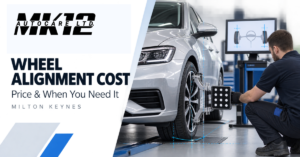

You notice the steering wheel sitting slightly to one side. Perhaps the car pulls on a straight road, or one edge of a tyre is wearing faster than the other. You search for wheel alignment cost in Milton Keynes, but the prices you find are difficult to compare. Why?
An alignment quote depends on what the garage will measure and adjust. A front-axle two-wheel alignment has a different scope from a four-wheel geometry check. Some quotes cover measurement only; others include an adjustment and a report. Vehicle design matters too, because not every angle can be adjusted on every car.
MK12 Autocare currently advertises a front-axle two-wheel alignment at £59.99. Its product page also describes digital measurement against manufacturer specifications and a before-and-after alignment report. Check the live wheel alignment when booking, as prices and service details can change.
This guide explains what alignment does, when it is worth checking and what to ask before paying. It also covers an important limit: changing wheel angles cannot repair a worn joint, damaged tyre or bent wheel. Finding the cause of a handling problem first can save you from paying for an adjustment that will not solve it.
What Is Wheel Alignment?
Wheel alignment measures the angles at which a vehicle’s wheels sit and travel. A technician compares those measurements with the manufacturer’s specifications and adjusts the angles that the vehicle allows. The aim is predictable steering, stable handling and appropriate tyre contact with the road.
It is easy to picture alignment as making the wheels “look straight”. In practice, the measurements are more precise. Small differences in angle may be difficult to see while the vehicle is parked, yet can affect how it steers or how its tyres wear over time.
Steering and Suspension Geometry
Steering geometry describes how the wheels, steering parts and suspension are positioned in relation to one another. These components guide the vehicle as it travels straight, turns and moves over bumps.
An impact with a pothole or kerb can change that relationship. Worn components can also allow movement that prevents a reliable adjustment. That is why a useful alignment appointment begins with a check of the relevant parts.
Toe, Camber and Caster
Toe describes whether the wheels point slightly towards or away from each other when viewed from above. Camber is the wheel’s inward or outward tilt when viewed from the front. Caster relates to the steering axis when viewed from the side.
All three can be measured, but that does not mean all three can be adjusted on every vehicle. The available adjustment depends on its suspension design and the service being booked.
Measuring Against Manufacturer Specifications
Alignment equipment measures the vehicle’s geometry and compares it with the correct manufacturer specification. The technician needs the right vehicle data because suitable settings vary by model and, in some cases, configuration.
A reading outside the specified range is a starting point for investigation. Before adjusting it, the technician should consider tyre condition, vehicle loading and whether a bent or worn component is affecting the result.
Alignment vs Physically Straight Wheels
A wheel can look straight while its alignment measurement is outside specification. Equally, a steering wheel can sit off-centre because of a steering or suspension issue that requires investigation.
Alignment equipment measures angles; it does not straighten a bent wheel. If you hit a pothole and now have vibration or visible rim damage, mention that when booking. The wheel and tyre may need checking before any geometry work.
What Affects Wheel Alignment Cost?
When comparing alignment wheel cost, ask what the quote includes. The difference between a low and high price may reflect the number of wheels measured, the adjustments available and whether the vehicle needs other work first.
A clear quote should tell you the service scope, what happens if a part is seized or damaged, and whether you will receive a record of the measurements. Those details are more useful than a headline price alone.
Two-Wheel vs Four-Wheel Alignment
A front-axle two-wheel alignment focuses on the front wheels. A four-wheel geometry service considers the relationship between front and rear wheels and may include rear adjustments where the vehicle provides them.
These services should not be treated as interchangeable. MK12 Autocare’s currently advertised product is specifically front-axle two-wheel alignment. If you need rear-axle measurement or adjustment, ask about the appropriate option before booking.
Vehicle Make and Suspension Design
Vehicle construction affects the work involved. Some cars offer a straightforward front toe adjustment; others have additional adjustable points or require particular setup procedures.
The condition of the vehicle matters as much as its badge. A clean, accessible adjuster can take less time than one affected by corrosion, even on two otherwise similar cars.
Measurement Only vs Adjustment
A measurement-only check records the current geometry. An alignment service may include both measurement and adjustment of available settings within its stated scope.
Ask what happens if the readings are already correct. Also ask what happens if they are incorrect but cannot be adjusted because another component needs repair. This makes the quote easier to understand before work starts.
Seized or Damaged Components
An adjustment cannot always be completed immediately. A seized track-rod adjuster, damaged suspension arm or worn joint may need separate work before the wheels can be set accurately.
That extra work should be explained and priced separately. Forcing an adjustment on a damaged component can create further problems, while adjusting around a worn part may fail to hold the intended setting.
Before-and-After Reporting
An alignment report records the measured angles before and after the work. It helps you see what was found, which readings changed and whether any values remain outside the specified range.
MK12 Autocare’s product page lists a before-and-after report as part of its front-axle service. Ask the technician to explain any reading you do not understand, particularly if a value could not be brought within specification.
Two-Wheel and Four-Wheel Alignment Compared
Both types of service use measurements to assess geometry. The difference is their scope. A front-axle service addresses the front wheels, while a four-wheel assessment also considers rear geometry and the relationship between the two axles.
The right choice depends on the vehicle and the reason for the visit. Steering position, tyre wear and the history of any impact can all help a technician recommend the appropriate check.
Front-Axle Two-Wheel Alignment
A front-axle service can be suitable when the concern relates to front steering geometry and the vehicle’s rear setup does not call for separate investigation. It commonly focuses on front toe, while other front angles may be measured as part of the assessment.
Confirm the precise measurements and adjustments included before booking. A service labelled “two-wheel” should not be assumed to include rear-axle correction.
Four-Wheel Geometry Measurement
Four-wheel measurement gives a broader picture of how the axles relate. It can be useful when there is rear tyre wear, unusual handling or a history of impact affecting more than the front of the vehicle.
Measurement and adjustment are still different things. A four-wheel reading does not mean every angle on all four wheels can be changed.
Vehicles with Adjustable Rear Geometry
Some vehicles have rear suspension settings that can be adjusted. Others have a fixed rear setup, or require parts to be replaced if a rear measurement is out of specification.
If rear tyre wear or rear-axle damage is your concern, tell the garage before choosing a front-only appointment. The correct service may require different equipment, time or repair work.
Choosing the Correct Service
Start with the symptom. Is the steering wheel off-centre? Are the front tyres wearing unevenly? Did the rear wheel strike a kerb? The answers help determine the right inspection.
You can contact MK12 Autocare with your registration and a short description of the problem. Because its listed product is a front-axle service, confirm suitability if the issue appears to involve the rear axle.
Wheel Alignment vs Wheel Tracking
Drivers often use wheel tracking and wheel alignment to mean the same thing. Garages may also use the words differently, which is why the service description matters more than the name.
A quote for “tracking” could refer mainly to a front toe adjustment. A more extensive geometry check may measure additional angles and both axles. Ask what is included rather than relying on either label.
How the Terms Are Commonly Used
In everyday conversation, tracking often means correcting the direction the front wheels point. Alignment is commonly used as the wider term for measuring and setting wheel geometry.
There is no benefit in arguing over the wording at the counter. Ask which wheels will be measured, which angles will be checked and which settings can be adjusted.
Basic Toe Adjustment
A basic toe adjustment changes how the relevant wheels point in relation to one another. Incorrect toe can contribute to rapid or irregular tyre wear.
Toe is only one part of the vehicle’s geometry. If another angle is out because a part is bent or worn, changing toe alone may not address the underlying problem.
Full Geometry Measurement
A broader geometry measurement may include toe, camber, caster and rear-axle readings, depending on the vehicle and the service offered.
The report can help separate an adjustable setting from a possible mechanical defect. It is worth asking whether measurement, adjustment and reporting are all included in the quoted price.
Questions to Ask Before Booking
Ask: “Is this front-axle or four-wheel measurement? Which adjustments are included? Will I receive a before-and-after report?” These questions make competing prices much easier to compare.
Also describe any pothole impact, steering vibration or unusual tyre wear. The garage may recommend checking tyres and suspension before attempting an adjustment.
Wheel Alignment vs Wheel Balancing
Wheel alignment and wheel balancing address different problems. Alignment concerns wheel angles relative to the vehicle. Balancing concerns how weight is distributed around a rotating wheel and tyre assembly.
They can both affect how a car feels, but paying for the wrong service may leave the symptom unchanged. Describe when the problem occurs, particularly the road speed and whether it began after an impact.
What Alignment Corrects
Alignment adjusts the available steering or suspension geometry towards the vehicle’s specified settings. It may help with an off-centre steering wheel or tyre wear linked to incorrect angles.
It cannot repair a tyre that is already damaged or a suspension joint that has developed play. Those issues need attention before final geometry settings can be trusted.
What Balancing Corrects
Wheel balancing addresses uneven weight distribution in a rotating wheel and tyre assembly. A technician identifies the imbalance and fits suitable weights where required.
An out-of-balance wheel may cause vibration at particular speeds. Balancing does not correct steering geometry, so it will not automatically solve persistent edge wear or a steering wheel that sits off-centre.
Different Types of Steering Vibration
Vibration can come from imbalance, a damaged tyre, a bent wheel or wear in steering or suspension parts. A severe impact can create more than one problem at once.
Tell the technician whether the vibration appears through the steering wheel, seat or whole vehicle, and whether it changes when braking. Those observations help direct the inspection.
When Both Services May Be Needed
If a pothole damages a tyre or wheel and changes the geometry, the vehicle may need tyre or wheel work, balancing and an alignment check.
The order matters. Damaged or worn components should be identified and repaired before final alignment. Otherwise, you may pay to set angles on a vehicle that still has a mechanical fault.
Signs You May Need Wheel Alignment
Common reasons to request an alignment check include steering pull, off-centre steering and uneven tyre wear. These signs justify inspection, though none proves that alignment is the only cause.
Look for patterns rather than one brief sensation. Road camber and wind can make a vehicle drift temporarily. A consistent change in handling, especially after an impact, deserves closer attention.
Vehicle Pulling Left or Right
If the car repeatedly pulls on a suitable straight road, incorrect geometry is one possibility. Unequal tyre pressures, tyre construction and brake drag can also cause pulling.
Check pressures against the manufacturer’s guidance when the tyres are cold. If the pull persists, describe it to the garage so the inspection covers more than alignment settings.
Off-Centre Steering Wheel
An off-centre steering wheel is especially noticeable when you travel straight and the wheel has to be held slightly to one side. It may follow a pothole strike or steering work.
A technician should assess the steering and geometry rather than simply repositioning the steering wheel. The goal is to find why the vehicle needs that steering input.
Uneven or Rapid Tyre Wear
Excessive wear on one edge or a feathered tread pattern can suggest a geometry issue. Tyre pressure, suspension wear and driving conditions can also affect wear.
Inspect all four tyres rather than looking only at the front pair. Existing wear will remain visible after alignment, even if the cause has been corrected.
Poor Stability or Changed Handling
A car that suddenly feels less stable, reacts differently around corners or needs frequent steering corrections should be inspected. Alignment may form part of that assessment.
Do not assume a geometry adjustment will fix a loose steering component or damaged tyre. A change in handling can be a sign of a fault that needs repair first.
Recent Pothole or Kerb Impact
A significant pothole or kerb strike can affect tyres, wheels, steering and suspension. The vehicle may pull afterwards, develop vibration or start wearing a tyre unevenly.
If the impact was severe, request a mechanical and tyre inspection alongside the geometry check. MK12 Autocare also has an article on alignment and suspension checks after pothole impacts for more background.
Can Alignment Save Money?
Alignment can help avoid avoidable tyre wear when incorrect geometry is the cause. The value of the service depends on finding the problem early enough and ensuring that the vehicle has no related mechanical fault.
It is best viewed as part of sensible vehicle maintenance. There is no guarantee that an alignment appointment will produce a particular saving in fuel or prevent every future steering repair.
Protecting Tyre Life
A tyre wearing rapidly on one edge may need replacement sooner than expected. If incorrect geometry is responsible, correcting it can help protect the remaining tyres from the same pattern.
A tyre already worn beyond a safe or legal condition still needs replacement. Alignment cannot put missing tread back onto it.
Reducing Rolling Resistance
Wheel angles outside specification can sometimes increase tyre scrub and rolling resistance. Correcting the relevant setting may reduce that unnecessary drag.
The effect on fuel use varies by vehicle and fault. Avoid treating alignment as a guaranteed way to achieve a specific fuel saving.
Protecting Steering and Suspension Components
Unusual tyre wear or handling can draw attention to a developing steering or suspension fault. Finding it during an alignment-related inspection may prevent you from driving with a damaged component unnoticed.
The alignment adjustment itself does not repair worn parts. The saving comes from identifying the right work and avoiding repeated, ineffective adjustments.
Preventing Repeat Tyre Replacement
If you fit new tyres without addressing the reason the old ones wore unevenly, the same pattern may appear again. Checking pressures, component condition and geometry helps break that cycle.
Ask for an inspection when replacing tyres that show unusual wear. That is more useful than assuming every new set automatically requires an adjustment.
When Alignment Cannot Fix the Problem
A geometry setting can be accurate only when the parts holding the wheels are in suitable condition. Wear, damage or incorrect tyres can make the vehicle pull or feel unstable even if the measured angles appear acceptable.
The technician should explain any mechanical issue found before proceeding. You may need a repair, tyre replacement or further investigation ahead of the alignment.
Worn Track Rods, Ball Joints or Bushes
Track rods, ball joints and bushes help control wheel position. If they have excessive wear, the wheel can move under load and fail to hold a consistent setting.
Replacing the worn component comes before final alignment. Ask whether the repair estimate includes a follow-up geometry check, since steering or suspension work can change the measurements.
Bent Wheels or Damaged Tyres
A bent rim, tyre bulge or internal tyre damage can cause vibration, pulling or irregular wear. Alignment equipment cannot make a damaged wheel round again.
Report any impact and visible damage. The garage can then inspect the tyre and wheel and advise whether it is appropriate to continue driving.
Brake Drag or Unequal Tyre Pressure
A dragging brake can pull the vehicle towards one side and may create excess heat. Unequal tyre pressure can also affect steering feel.
Check tyre pressures as specified for the vehicle. If a wheel becomes unusually hot or braking feels abnormal, arrange a brake inspection rather than assuming the car simply needs tracking.
Accident or Structural Damage
After a collision, out-of-range readings can indicate damaged suspension or vehicle structure. Adjusting available settings may not correct the cause.
Tell the garage about known accident repairs. Depending on the findings, the vehicle may need more detailed measurement or specialist repair before alignment can be completed properly.
What Happens During an Alignment Appointment?
The technician first considers the complaint and checks that the tyres and relevant steering or suspension components are suitable for measurement. They then fit the equipment, record initial readings and adjust the settings covered by the booked service where possible.
The final reading shows what changed. If a value remains outside specification because a component is damaged or the angle is not adjustable, that should be explained alongside the report.
Tyre and Suspension Inspection
A sensible first step is checking tyre condition and pressure and looking for obvious play or damage in relevant components. Incorrect tyre pressure can affect how the car behaves during a road test.
The inspection may reveal why an adjustment cannot yet be completed. It is better to identify that before changing a setting that will not remain stable.
Sensor Setup and Initial Measurement
Alignment equipment is positioned on the vehicle’s wheels according to the system’s procedure. The technician selects the correct vehicle data and records the starting measurements.
These initial figures create the “before” side of an alignment report. They also help identify whether the concern matches the geometry readings.
Geometry Adjustment
The technician adjusts the settings available within the scope of the service. For MK12 Autocare’s currently advertised product, that scope is front-axle two-wheel alignment.
Not every measured angle will have an adjustment point. If a component is seized or the required correction is outside the booked work, the technician should explain the next step before extra work proceeds.
Steering-Wheel Centring and Final Report
The steering wheel should be considered as the final settings are made. A final measurement records the result and supports a check of the vehicle’s straight-ahead behaviour.
MK12 Autocare advertises a before-and-after report for its service. Keep your copy, especially if you are monitoring tyre wear or have recently had suspension repairs.
Wheel Alignment at MK12 Autocare
MK12 Autocare currently lists its front-axle two-wheel alignment at £59.99. The product page describes digital equipment, settings based on manufacturer specifications and a before-and-after report. The product page is the right place to check the live price before booking.
Tell the team what prompted the visit. An off-centre steering wheel, front tyre wear and a recent pothole strike do not always call for the same work, even when they all lead you to search for car wheel alignment.
Front-Axle Two-Wheel Service
The advertised service covers the front axle. Confirm its suitability if you are concerned about rear tyre wear, rear-wheel damage or a handling change after a collision.
If a worn steering or suspension part is found, ask for the repair recommendation and whether alignment should follow the repair.
Stacey Bushes Workshop
MK12 Autocare lists its workshop at 27 Heathfield, Stacey Bushes, Milton Keynes. Its site displays different postcode endings in different sections, so check the exact postcode in your booking confirmation.
Drivers from Stacey Bushes, Wolverton and nearby parts of Milton Keynes can discuss the symptom before travelling to the workshop. Bringing the vehicle registration helps the team identify the correct specifications.
Booking from Milton Keynes and Wolverton
Use the online booking or contact the workshop with your registration number and a brief description of the problem. Mention any new tyres, suspension repairs or recent impact.
If a warning light or electronic steering concern accompanies the handling problem, a separate vehicle diagnostic test may be relevant. For wider maintenance needs, review MK12 Autocare’s car servicing options.
Compare the Scope Before Comparing the Price
The useful question is not simply, “What is the lowest cost wheel alignment result I can find?” It is, “Which wheels will be measured, what can be adjusted, and will this service address my car’s problem?”
MK12 Autocare currently advertises front-axle two-wheel alignment for £59.99, with digital measurement and a before-and-after report. Check its product page for the live price and confirm that the front-axle scope suits your vehicle.
If your car pulls, the steering wheel sits off-centre or the tyres wear unevenly, arrange an inspection. Share any pothole impact or recent repair history. Correcting the geometry can help when the angles are the cause, but damaged tyres and worn parts need their own remedy. Knowing the difference helps you pay for the work your vehicle actually needs.
Frequently Asked Questions
Q1: Is wheel alignment included when I buy new tyres?
Do not assume it is. Tyre fitting, balancing and alignment are separate services, although a garage may offer them together in a package.
Ask for the inclusions before paying. Alignment is especially worth discussing if the old tyres show uneven wear.
Q2: Can every vehicle have all four wheels adjusted?
No. A vehicle may allow adjustments at both axles, only at the front or at selected angles. Its design determines what can be changed.
A four-wheel measurement can still show useful rear readings even when a rear angle has no routine adjustment point.
Q3: Does wheel alignment fix steering vibration?
It may address a geometry issue contributing to poor handling, but vibration commonly needs other checks, including wheel balance, tyre condition and wheel damage.
Tell the technician the speeds and conditions at which the vibration occurs so the correct cause can be investigated.
Q4: How long does an alignment appointment take?
The time varies with the vehicle, service scope and condition of its adjusters. An inspection may also reveal a component that needs repair first.
Ask MK12 Autocare for an appointment estimate when booking. Avoid relying on a generic time quoted for a different vehicle or four-wheel service.
Q5: Will alignment fix uneven wear already present on a tyre?
No. Alignment cannot restore tread that has worn away. If incorrect geometry caused the wear, correcting it may help prevent the same pattern from developing further.
The technician should also assess whether the tyre remains safe to use or needs replacement.
Q6: Do I need alignment after suspension repairs?
It depends on which parts were repaired and the manufacturer’s procedure. Work on steering or suspension components that affect wheel position commonly calls for a geometry check afterwards.
Ask whether the repair quote includes measurement and any required adjustment.
Q7: Can tyre pressure make a car pull to one side?
Yes. A pressure difference can affect how the car rolls and steers. Check pressures when the tyres are cold and use the vehicle manufacturer’s recommended values.
If the pull remains after pressures are corrected, ask for tyre, brake, steering and alignment checks.
Q8: Should I align the wheels before or after replacing damaged tyres?
Have the tyres inspected first. A damaged tyre may be unsafe and can affect how the vehicle behaves during the assessment.
Once damaged tyres or worn components are dealt with, the technician can make the final geometry measurements and adjustments.