
A van is more than transport when your business depends on it. It carries tools, stock and equipment, gets your team to customers and often represents your company on the road. An unexpected MOT failure can therefore disrupt an entire working day. This practical van MOT checklist helps businesses in MK12 and Wolverton prepare early, identify visible problems and arrange repairs before the test date.
The checklist covers the areas most relevant to working vans, including vehicle class, tyres, load rating, brakes, suspension, lights, visibility, emissions, DPF condition, body security and warning lamps. It is suitable as an owner or fleet-manager pre-check, but it cannot replace the statutory test or a professional mechanical inspection. Do not drive a van that appears unsafe simply because it has an MOT appointment.
Why Van MOT Preparation Matters for Businesses
MOT preparation is not about finding a way around the test. It is about spotting obvious defects before they interrupt your schedule. A failed bulb, damaged tyre, ineffective wiper or warning lamp may be noticed during a five-minute check. A braking, suspension or emissions issue may require professional investigation, but identifying the symptom early gives you more time to act.
Start seven to fourteen days before the appointment rather than waiting until the night before. Review the previous certificate, speak with the regular driver and inspect the van in daylight. Repeat the quick checks on test day, particularly lights, tyres, mirrors, washer fluid and registration plates.
Reducing Vehicle Downtime
Unexpected downtime can delay deliveries, move appointments and leave employees without essential equipment. Early preparation allows you to schedule van repairs in Milton Keynes around existing work rather than reacting after a failure. For a small company with one vehicle, that flexibility can protect a full week of bookings.
Protecting Drivers and Business Assets
A roadworthy van protects the driver, passengers, cargo and other road users. Tyres, brakes and suspension work harder when a commercial vehicle carries weight. A fault that feels minor in an empty van can become more serious when the vehicle is loaded or travelling at road speed.
Avoiding Preventable MOT Failures
Many visible issues can be checked safely without lifting the van or dismantling anything. Test the lights, horn, washers and wipers. Clean the number plates and lamp lenses. Inspect the road tyres for damage, tread and obvious under-inflation. Make sure required doors, seats and seatbelts operate correctly.
Confirm Whether Your Van Needs a Class 7 MOT
Not every van requires Class 7. A goods vehicle with a DGW of no more than 3,000 kg is generally Class 4. A conventional petrol, diesel or hybrid goods vehicle from 3,001 kg to 3,500 kg is generally a Class 7 vehicle. Body shape and business use do not decide the class on their own.
The current DVSA MOT inspection manual also places qualifying zero-emission goods vehicles from 3,501 kg to 4,250 kg within Class 7. This extension does not apply to hybrids, including range extenders that use an internal-combustion engine.
Understanding Design Gross Weight
Design gross weight, or DGW, is the maximum gross weight at which the manufacturer designed the vehicle to operate. It includes the van, fuel, driver, passengers, tools and load. You may also see terms such as gross vehicle weight, maximum authorised mass or revenue weight.
DGW is not kerb weight and does not change because the load area is empty on test day. For example, an empty van may weigh about 2,100 kg but still have a 3,500 kg DGW. It remains within the normal Class 7 range because its approved maximum, not its current weight, determines the class.
Checking the Manufacturer’s Plate
The weight plate is often located in a door aperture, under the bonnet or on another structural area identified in the handbook. It normally shows the VIN, maximum vehicle weight, train weight and axle limits. Plate designs vary, so ask the test centre if the figures are unclear.
Class 4 vs Class 7 Van MOT
The main dividing point for conventional goods vehicles is 3,000 kg DGW. Up to that limit, the van normally uses Class 4. From 3,001 kg to 3,500 kg, it normally uses Class 7 MOT testing. The test covers similar safety and environmental areas, but the station must be authorised and equipped for the correct class.
Inspect Van Tyres and Wheels
Tyres connect the van to the road and carry every kilogram placed inside it. Examine all road tyres in good daylight, including the visible inner sidewall. Look for cuts, cracks, objects, lumps, bulges, exposed material, uneven tread and signs that the tyre is rubbing another component.
Load Rating and Tyre Condition
Class 7 tyre checks include load rating. The DVSA tyre inspection guidance requires the rating to be suitable for the axle weight. A tyre may have the correct dimensions but still be unsuitable if its load index is too low.
Tread Depth and Sidewall Damage
For goods vehicles not exceeding 3,500 kg DGW, and qualifying zero-emission goods vehicles up to 4,250 kg, the primary tread grooves need at least 1.6 mm across the central three-quarters of the tread breadth and around the full circumference. Use a proper gauge at several points rather than relying on one reading.
Uneven Wear and Wheel Alignment
Wear on one edge, both shoulders or the centre can indicate pressure, loading, geometry or suspension problems. Replacing the tyre without correcting the cause may lead to the same pattern on the new one. Check pressure against the manufacturer’s load-specific recommendation when the tyres are cold.
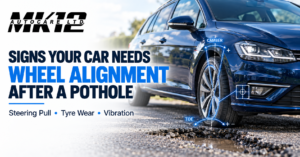
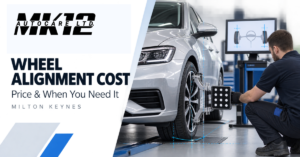
If the steering wheel sits off-centre, the van pulls on a level road or tyre wear accelerates after a pothole impact, ask for the steering and suspension to be assessed. Wheel alignment may be appropriate once worn or damaged components have been ruled out.
Signs of Alignment or Suspension Problems
Common signs include feathered tread, different wear on left and right tyres, vibration, unstable cornering, steering pull and recurring loss of straight-ahead alignment. A van that sits lower on one side may have a spring, loading or suspension issue.
Alignment itself is not a simple MOT pass item, but the related condition of tyres, steering and suspension matters. Treat unusual handling as a safety concern rather than waiting for the test to identify it.
Check Brakes and Parking Brake Performance
The official test measures braking performance using approved equipment. Your pre-check cannot reproduce that assessment, but the driver can identify changes in pedal feel, stopping behaviour and parking-brake operation during normal use. Do not carry out emergency braking tests on a public road.
Brake Pedal Warning Signs
The pedal should feel consistent with the van’s normal behaviour. Excessive travel, a spongy sensation, unusual hardness, pulsing or a pedal that gradually sinks can indicate a problem. The vehicle should not pull sharply to one side during ordinary braking.
Brake Disc and Pad Condition
You may be able to see part of the disc and outer pad through the wheel, but that view is incomplete. Severe scoring, a pronounced lip, heat discolouration or very thin visible material warrants inspection. Never remove wheels unless you have the correct equipment and competence.
Parking Brake Operation
The parking brake should engage securely and release normally. On a suitable stationary surface, notice whether it holds the van without excessive lever or pedal travel. Electronic systems should complete their normal operating sequence without a warning message.
Braking Problems Under Load
A heavy load can make reduced braking performance more noticeable, but businesses should not wait for that situation to expose a fault. Drivers should report changes after loading, including pulling, vibration, overheating smells or longer stopping distances.
Check Steering and Commercial Suspension
Steering and suspension affect directional control, tyre contact and stability. During normal journeys, notice new play, stiffness, vibration, pulling or knocking. A change that appears only when loaded is still important and should be explained to the technician.
Do not attempt to test joints by lifting a heavy van on unsuitable equipment. The MOT uses approved facilities and safe inspection methods. An unsupported commercial vehicle can cause serious or fatal injury.
Steering Play and Pulling
The steering wheel should not feel loose at its mounting, and excessive free movement can indicate wear in the system. Pulling may relate to tyres, pressure, alignment, brakes, steering or road camber, so diagnosis should consider the whole vehicle.
Power-steering warnings, intermittent assistance or fluid leakage need attention. If control feels unpredictable, stop using the van and seek professional advice instead of continuing until the MOT date.
Suspension Noise and Instability
Listen for knocks, creaks or rattles over ordinary road surfaces and speed humps. Repeated bouncing, excessive body movement, nose-diving, poor stability or one corner sitting low can point to worn or damaged suspension components.
Springs, dampers, bushes, joints, arms and mounting points are all subject to inspection. Minor fluid misting and severe leakage are not the same, so allow a technician to judge the component rather than assuming every mark requires replacement.
Effects of Carrying Heavy Loads
Frequent heavy loads increase the demands placed on tyres, wheel bearings, springs, dampers and brakes. Even within the legal payload, poor distribution can affect handling. Secure cargo and keep the heaviest items low and positioned according to safe-loading guidance.
Review payload needs when permanently fitting racking, tanks, generators or specialist equipment. These additions reduce the remaining capacity and may change axle loading. If weight is uncertain, obtain proper advice instead of estimating from the load-space volume.
Inspect Lights, Mirrors and Visibility
Lighting and visibility checks take only a few minutes and often reveal straightforward faults. Clean the lenses, mirrors, windscreen and registration plates. Test each lamp one function at a time in a place where you can see whether it illuminates clearly.
Make sure dashboard tell-tales respond normally. A flickering or repeatedly failing bulb may indicate moisture, wiring or a connector problem rather than a defective bulb alone. Use the correct approved replacement type for the lamp assembly.
Exterior and Commercial Vehicle Lights
Test dipped beam, main beam, sidelights, indicators, hazard lights, brake lights, rear fog lamp and registration-plate lights. Include high-level brake lamps and side marker lamps where fitted and relevant. Lenses should be secure, the correct colour and not seriously obscured.
Ask another adult to observe the rear lamps, or use a reflection from a wall or window while the van remains stationary. Confirm that brake lights illuminate when the pedal is pressed and go out after release.
Mirrors and Blind-Spot Visibility
Commercial vans often have limited rearward vision, which makes mirrors particularly important. Check that the required mirrors are present, securely mounted, adjustable and capable of providing a clear view. Replace severely damaged glass rather than relying on a small unaffected section.
Clean any camera used as a supplementary visibility aid, but remember that a camera may not replace a required mirror. Remove items from the dashboard and windscreen that significantly obstruct the driver’s view.
Windscreen, Wipers and Washer Fluid
Inspect the windscreen for chips, cracks and heavy scratching, especially in the area swept in front of the driver. Damage is assessed by location and size, so arrange an early professional assessment if you are unsure.
Check wiper blades for splits or missing rubber and confirm they clear the required view without heavy smearing. Fill the washer reservoir with suitable fluid and test the jets. A blocked jet, failed pump or empty bottle can undermine an otherwise well-prepared van.
Check Exhaust, Emissions and DPF
Start the van outdoors and listen for a new blowing, hissing or unusually loud exhaust. Look for a hanging section without touching hot components or going underneath the vehicle. Persistent exhaust fumes in the cab require urgent investigation.
The emissions procedure depends on fuel type, age and approval data. Routine vehicle servicing supports engine health, but an oil change or additive cannot guarantee an emissions pass or repair an existing fault.
Unusual Smoke and Exhaust Noise
Brief white vapour in cold weather can be condensation, but persistent blue, black or dense white smoke may indicate a problem. Note whether it appears at startup, idle or acceleration and share that information with the garage.
Avoid aggressive revving to clear smoke. The current DVSA emissions manual treats excessive smoke and several emissions defects as major or dangerous, depending on the condition.
DPF Warning Lights
A diesel particulate filter warning can relate to soot loading, failed regeneration or a sensor and engine-management issue. Follow the vehicle handbook when a warning first appears, but do not continue driving if the van enters limp mode, overheats or shows additional safety warnings.
Professional engine diagnostics may be needed to establish the cause. Clearing a code or adding cleaner without testing the system can delay the correct repair. Never remove the DPF or have it internally deleted.
Diesel Emissions and MOT Failure Risks
Visible and identifiable emissions-control equipment fitted by the manufacturer must not be missing, obviously modified or defective. Evidence that a DPF has been tampered with is a major defect. A DPF-equipped vehicle emitting visible smoke during the metered check can also receive a major defect.
Check engine oil and coolant levels according to the handbook and report abnormal engine noise before the appointment. A tester may decline a smoke test if the engine appears unsafe, so address serious mechanical concerns first.
Inspect Van Body and Safety Equipment
A working van’s doors, latches and body components are used frequently and can wear faster than those on a lightly used car. Walk around the van and check for insecure panels, sharp damage, serious corrosion and components that may detach.
Make sure the cab is reasonably tidy and the tester can access required areas. Loose tools should not roll into the pedal area. Secure permanently installed equipment and remove temporary items that create a safety risk.
Doors, Hinges and Latches
Open and close the cab, side-loading and rear doors. They should latch securely and open as required. Check handles, hinges, check straps and catches for obvious damage or excessive movement.
The DVSA can refuse or abandon a test when a door, tailgate, bonnet or other easily opened access device cannot be opened and this prevents inspection. Do not tie a damaged door shut as a substitute for repair.
Registration Plates and Vehicle Identification
Clean both number plates and check that they are secure, legible and not seriously damaged. Confirm the rear plate illumination works. Do not use tinted covers or accessories that obscure the characters.
The VIN or chassis identification must be present and legible as required. If a plate or marking appears damaged, contact the test centre before attempting any work. Never modify an identification number yourself.
Seatbelts, Horn and Dashboard Warnings
Pull each required seatbelt out, inspect the webbing and fasten it into the correct buckle. Confirm that it latches, releases and retracts. The driver’s seat should be secure and able to lock in a usable position.
Test the horn briefly in an appropriate location. Switch on the ignition and observe the normal warning-lamp sequence. Engine, ABS, airbag, electronic stability control or brake warnings may require van diagnostics before the MOT.
Prepare the Van for Test Day
Confirm the booking, vehicle class and location before leaving the depot. Repeat the light and tyre checks, fill the washer bottle and clean the number plates. Ensure there is enough fuel or battery charge for the inspection procedures.
Allow extra time rather than placing the appointment directly between customer visits. A test can reveal defects that need discussion, and a rushed schedule can make a manageable issue more disruptive.
Remove Unnecessary Heavy Loads
Unload unnecessary stock, waste and heavy portable equipment. The goal is to give the tester safe access and keep the presented vehicle within the capacity of the approved equipment. The DVSA may allow a station to refuse a test when a load, insecure load or other item prevents a proper inspection.
You do not need to strip out correctly installed permanent business equipment, but it must be secure. If the van cannot be emptied fully, discuss its presented weight and load arrangement with the centre before the appointment.
Bring Vehicle and Booking Information
Have the registration number, booking confirmation, contact details and keys available. Bring any key or adapter needed for locking wheel fasteners if related inspection or repair work may be required. Tell the garage about intermittent symptoms and previous advisories.
The previous MOT certificate is normally available electronically, but reviewing its advisories is useful. An item that was close to the limit last year may have deteriorated after another year of commercial use.
Allow Time for Repairs or Retesting
Book before the expiry date rather than on the final available day. You can normally test up to one month, minus one day, before expiry and keep the same renewal date. This window gives you time to authorise repairs and arrange any applicable retest.
An MOT appointment does not make an unsafe van legal to drive. If the certificate has expired or the vehicle fails, ask the test centre whether it can be driven and what restrictions apply. Never drive with dangerous defects.
Van MOT and Fleet Maintenance in MK12
MK12 Autocare provides local MOT testing services from 27 Heathfield, Stacey Bushes, Milton Keynes, MK12 6HR. The workshop is convenient for businesses in Wolverton, Wolverton Mill, Bradville, Greenleys, Haversham and the wider Milton Keynes area.
Confirm each vehicle’s class when arranging the appointment. MK12 Autocare supports eligible Class 4, Class 5 and Class 7 vehicles, subject to the specification and test-bay capability. Class 5 is a separate passenger-vehicle category and should not be chosen as an alternative for a Class 7 goods van.
Support for Wolverton Mill Businesses
Local access can reduce travel and make drop-off simpler for trades, delivery companies and service businesses based around Wolverton Mill. Provide the registration, fuel type, body style and DGW so the team can identify the appropriate MOT testing service.
If you are searching for a Class 7 MOT near me appointment, mention high-roof, long-wheelbase or specialist conversions before arrival. Dimensions, plated weight and installed equipment can affect whether the vehicle fits the approved facility safely.
Combining Class 7 MOT with Vehicle Servicing
A service and MOT can be arranged together when workshop availability allows. The MOT checks specified road safety and environmental standards on the test day. Servicing follows maintenance tasks based on the vehicle, mileage and schedule. One does not replace the other.
Combining them can reduce the number of separate workshop visits, but ask for a clear quotation. Testing, servicing, diagnostics and repairs should be described separately so you understand what is included and what requires approval.
Booking Multiple Fleet Vehicles
Create a list containing the registration, class, DGW, expiry date, mileage and known issues for every van. Stagger bookings to retain operational cover and identify a driver or manager who can approve necessary work.
To book an MOT online or arrange several vehicles, provide accurate details for each one rather than assuming the fleet uses a single class. Ask MK12 Autocare about suitable appointment spacing and how updates will be communicated.
Conclusion
A useful van MOT checklist starts with the correct vehicle class and continues through tyres, brakes, suspension, lights, visibility, exhaust, DPF, body security and warning systems. Begin early, listen to driver feedback and repair faults properly. Remove unnecessary loads and make sure inspection areas are accessible on test day. For a Class 4 or Class 7 MOT in MK12 Milton Keynes, contact MK12 Autocare and provide the registration and plated DGW before booking.
Frequently Asked Questions
Q1: Does my 3,500 kg van need a Class 7 MOT?
Yes, a conventional goods vehicle with a DGW of 3,500 kg generally requires Class 7 because it exceeds the 3,000 kg Class 4 goods-vehicle limit. Confirm the plate and body classification, as special vehicle categories can follow different rules.
Q2: Do I need to empty my work van before its MOT?
Remove unnecessary heavy or loose items and secure permanent equipment. A load can be a reason to refuse or abandon the test if it prevents proper inspection or makes testing unsafe. Ask the centre in advance when the van cannot be fully emptied.
Q3: What tyre tread depth does a Class 7 van need?
The primary grooves normally need at least 1.6 mm across the central three-quarters of the tread breadth and around the full circumference. Tyre condition, structure, fitment and suitable Class 7 load rating also matter.
Q4: Can a DPF warning light cause an MOT failure?
A relevant engine-management warning can cause a major defect on applicable vehicles. Missing, obviously modified or defective emissions equipment and evidence of DPF tampering can also cause failure. Arrange proper diagnosis rather than only clearing the warning.
Q5: What happens if my van fails with a dangerous defect?
Do not drive it until the dangerous defect has been repaired. Ask the test centre about repairs, recovery and retest arrangements. An existing unexpired certificate does not make a dangerously defective vehicle safe or legal to use.
Q6: Can I book a van MOT and full service together?
Yes, subject to workshop availability. Request an MOT and full service and confirm the separate work and pricing. The MOT is a statutory inspection, while the service covers planned maintenance.
Q7: How early can I book my van’s MOT?
You can normally take the test up to one month, minus one day, before the current certificate expires and keep the same renewal date. Booking within that window gives a business more time to arrange repairs without losing the original anniversary.
Q8: Where can I book a van MOT near Wolverton?
MK12 Autocare is located at 27 Heathfield, Stacey Bushes, Milton Keynes, MK12 6HR, close to Wolverton and Wolverton Mill. Provide the vehicle registration and DGW